Biofilms: The Invisible Shields That Keep Skin Sick
April 2, 2026
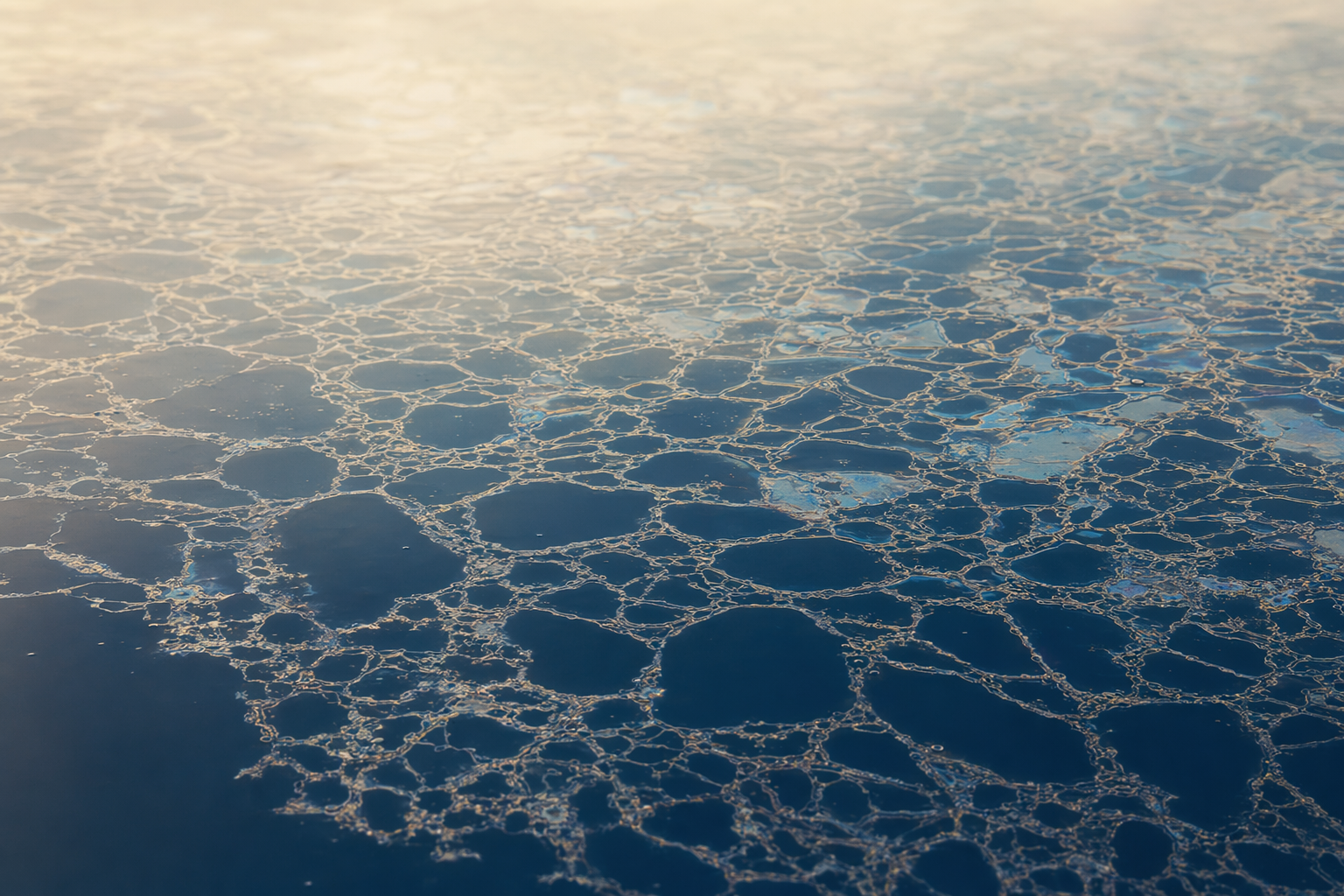
When we think of bacteria on skin, we tend to imagine individual organisms — free-floating microbes that can be washed away or killed with antiseptics. But the reality is far more complex. In chronic skin conditions, bacteria rarely operate alone. They form biofilms: organized, cooperative communities encased in a self-produced protective matrix.
Biofilms are everywhere in nature — on rocks in streams, on the surface of your teeth (dental plaque is a biofilm), on medical devices. And on compromised skin, they represent one of the most significant barriers to recovery.
What Makes Biofilms Different
A free-floating bacterium (called "planktonic") is relatively vulnerable. Antibiotics can reach it. The immune system can target it. Antiseptics can kill it. But when bacteria form a biofilm, the rules change dramatically.
- The extracellular matrix acts as a physical barrier, blocking antibiotics and immune cells
- Bacteria within biofilms can be up to 1,000 times more resistant to antibiotics than their planktonic counterparts
- Biofilms support quorum sensing — chemical communication that coordinates group behavior
- Mature biofilms periodically release planktonic cells that seed new biofilm colonies elsewhere
1,000×
more antibiotic-resistant than free-floating bacteria — biofilm-embedded bacteria require 10 to 1,000 times higher antibiotic concentrations for eradication
Source: Ceri et al., Journal of Clinical Microbiology; corroborated by Høiby et al., International Journal of Antimicrobial Agents (PMID: 25630538)
Biofilms in Skin Conditions
In acne, Cutibacterium acnes (formerly P. acnes) forms biofilms within hair follicles. These biofilms contribute to the persistence of lesions and the frequent failure of antibiotic therapy. In eczema, Staphylococcus aureus biofilms colonize damaged skin, triggering immune responses and preventing barrier recovery. In chronic wounds, polymicrobial biofilms are the primary reason healing stalls.
This is why antibiotic courses for skin conditions often work temporarily — they reduce the planktonic population — but the condition returns once treatment stops. The biofilm survives, and repopulation begins immediately.
80%
of chronic bacterial infections involve biofilms, according to NIH estimates
Source: National Institutes of Health (NIH); Jamal et al., Journal of the Chinese Medical Association (PMID: 29042186)
“You can't solve a structural problem with a chemical solution. Biofilms aren't just resistant bacteria — they're bacterial architecture.”
Mechanical vs. Chemical Disruption
Because the biofilm matrix is a physical structure, purely chemical approaches (antibiotics, antiseptics) have inherent limitations. Researchers have increasingly explored mechanical disruption strategies — approaches that physically break down the biofilm structure, exposing the bacteria within to treatment or immune clearance.
This is where oxygen nanobubble technology becomes relevant. Sub-200nm bubbles carry a negative surface charge (zeta potential). Research has shown that the interfacial properties of nanobubbles interact with biofilm structures in laboratory settings. The application of this research to cosmetic skincare operates within a different framework.
A New Angle on an Old Problem
Biofilm-related infections cost healthcare systems billions annually. In dermatology, they underpin the chronic nature of conditions that affect billions of people. The conventional approach — escalating antibiotic potency — is running into the wall of antimicrobial resistance.
Mechanical disruption doesn't replace antibiotics. But it opens a complementary pathway: weaken the fortress so that the body's own defenses — and any concurrent treatments — can actually reach the bacteria inside. It's not about killing harder. It's about changing the battlefield.